Companion press kit
Everything you need to write about Companion, the daily reflection app that listens first: the facts, two ready blurbs, a note from the makers, and the icon, screenshots and video. All assets on this page may be used unaltered in coverage of Companion.
At a glance
- Name
- Companion (store title: Companion: Daily Reflection)
- What it is
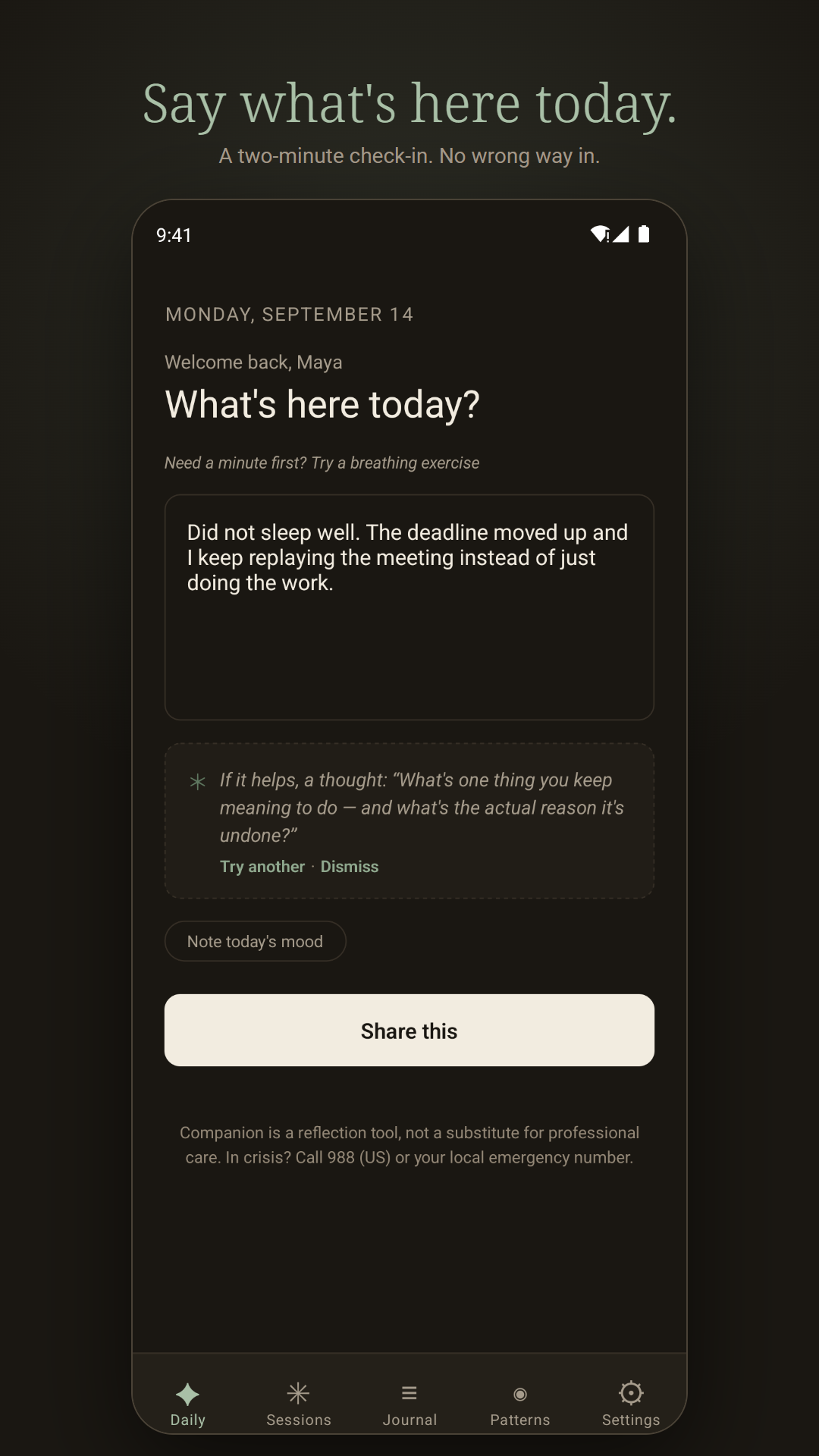
- A daily reflection app: a two-minute check-in that mirrors what you wrote before it notices anything, guided sessions for the things that need more room, patterns over time, and a private journal.
- Developer
- Kronos Automation
- Platform
- Android, on Google Play. iOS is planned; the landing page takes a waitlist.
- Launched
- September 17, 2026, worldwide on Google Play
- Price
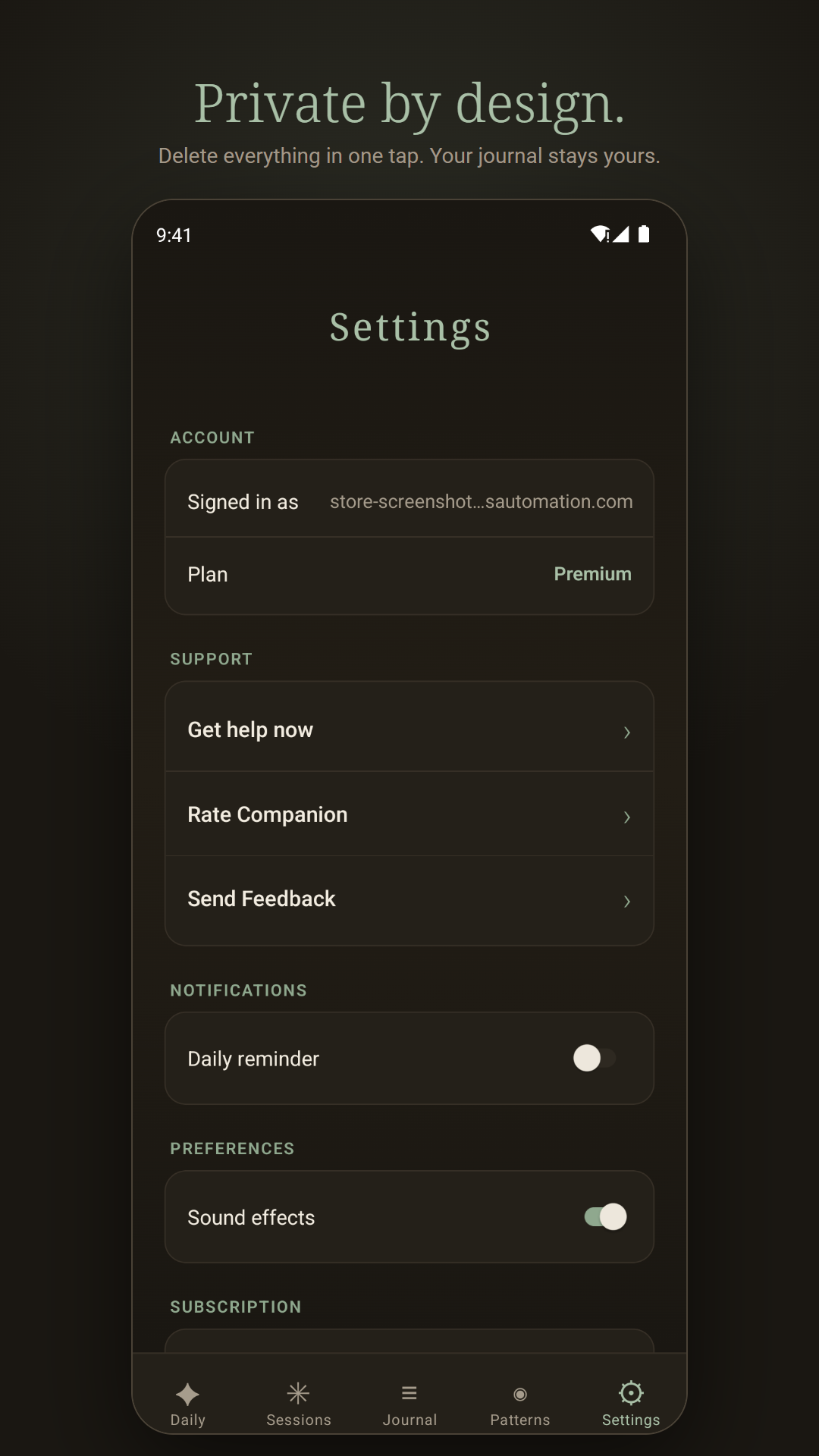
- Free with one check-in a day. Premium is $4.99 a month after a 7-day free trial: unlimited check-ins and sessions, follow-up messages within a session, mood trends and pattern insights.
- Languages
- English
- Website
- companion.kronosautomation.com
- Contact
- support@kronosautomation.com
Blurbs
Companion is a daily reflection app for Android that listens first. Write a few honest sentences about what's on your mind and it mirrors what you said before it notices anything, shaped by your own last thirty days. Guided sessions give hard things more room, Patterns shows what recurs, and a private journal holds the rest. Free to start, always.
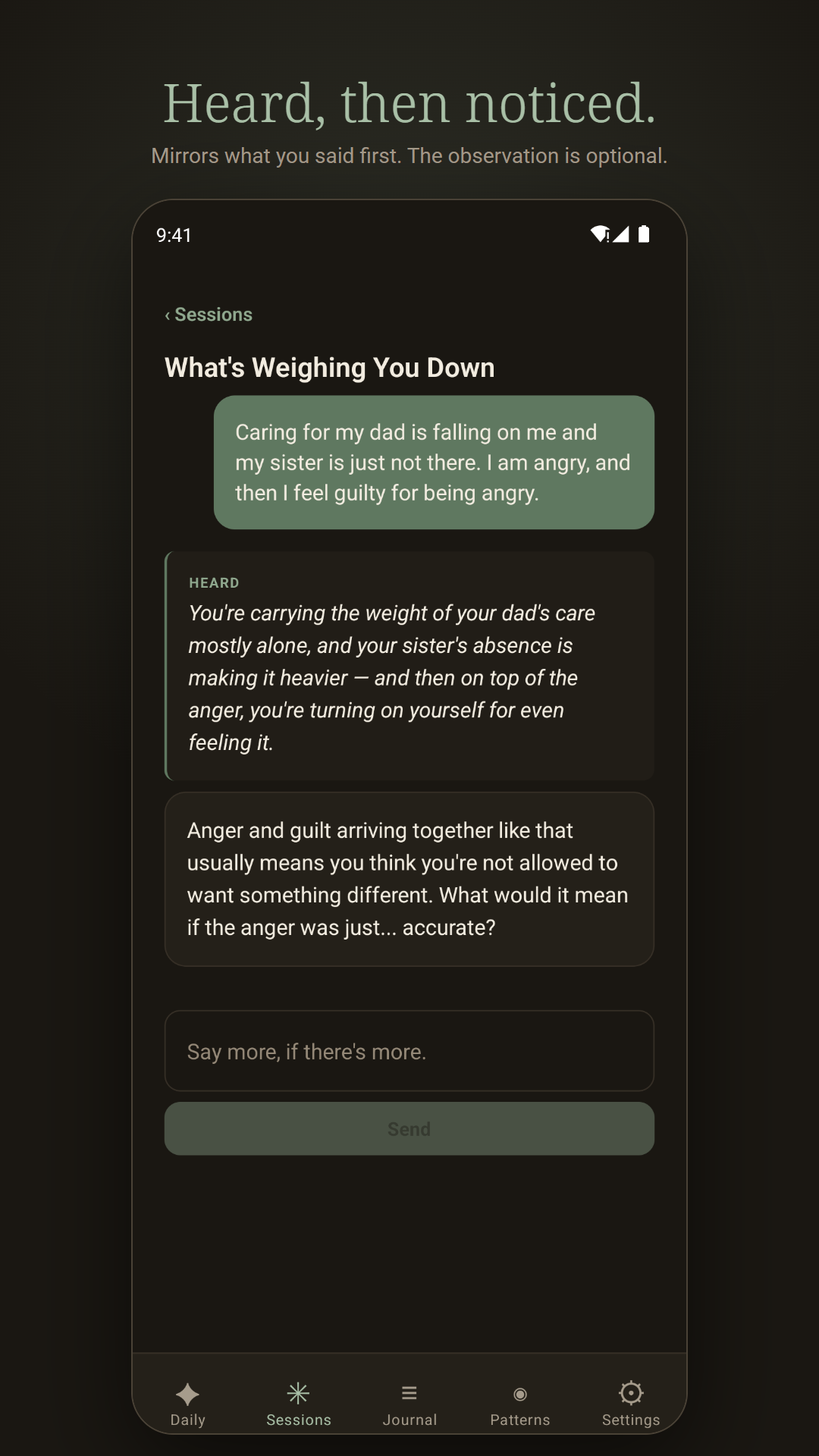
Companion is a daily reflection app for Android, built around a simple idea: the most useful thing a thinking partner can do is listen before it speaks. Open it, note your mood if you like, and write a few honest sentences. In under a minute you get a reply in two parts. First it mirrors what you said, plainly, without advice. Then it offers one observation. Because Companion keeps your last thirty days of check-ins in view, that observation is about you, not about people in general: it notices what you keep coming back to, and says so.
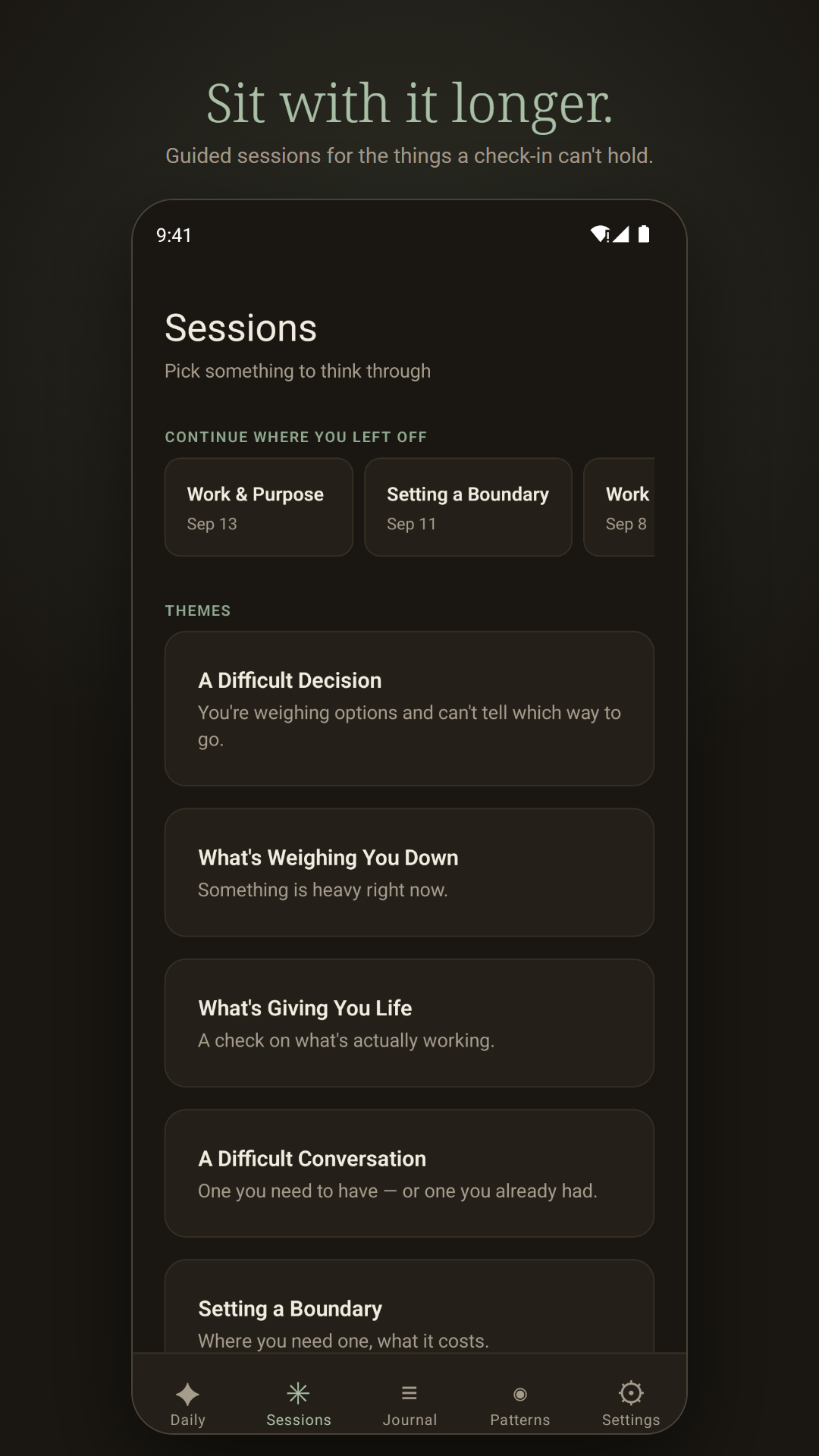
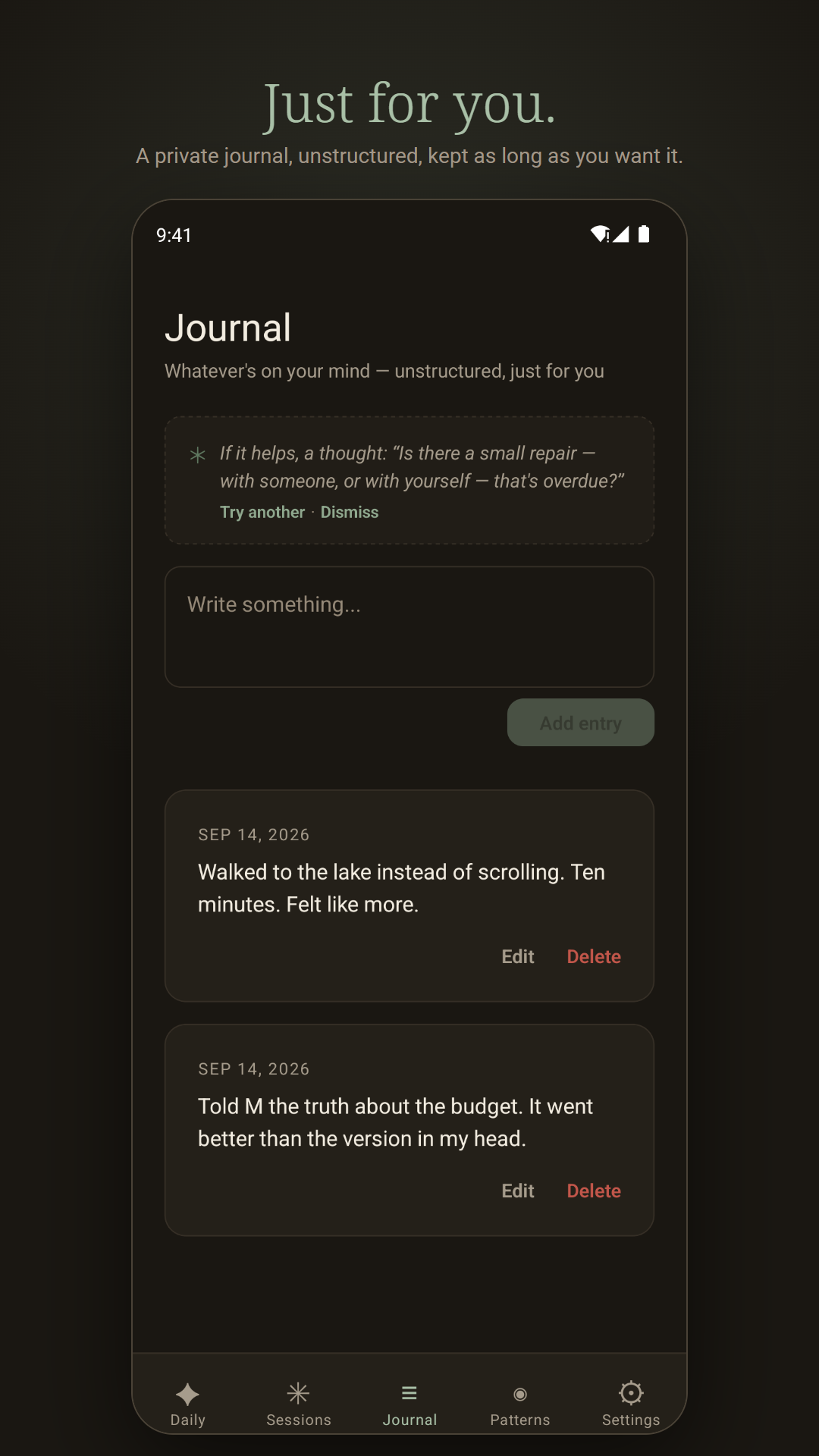
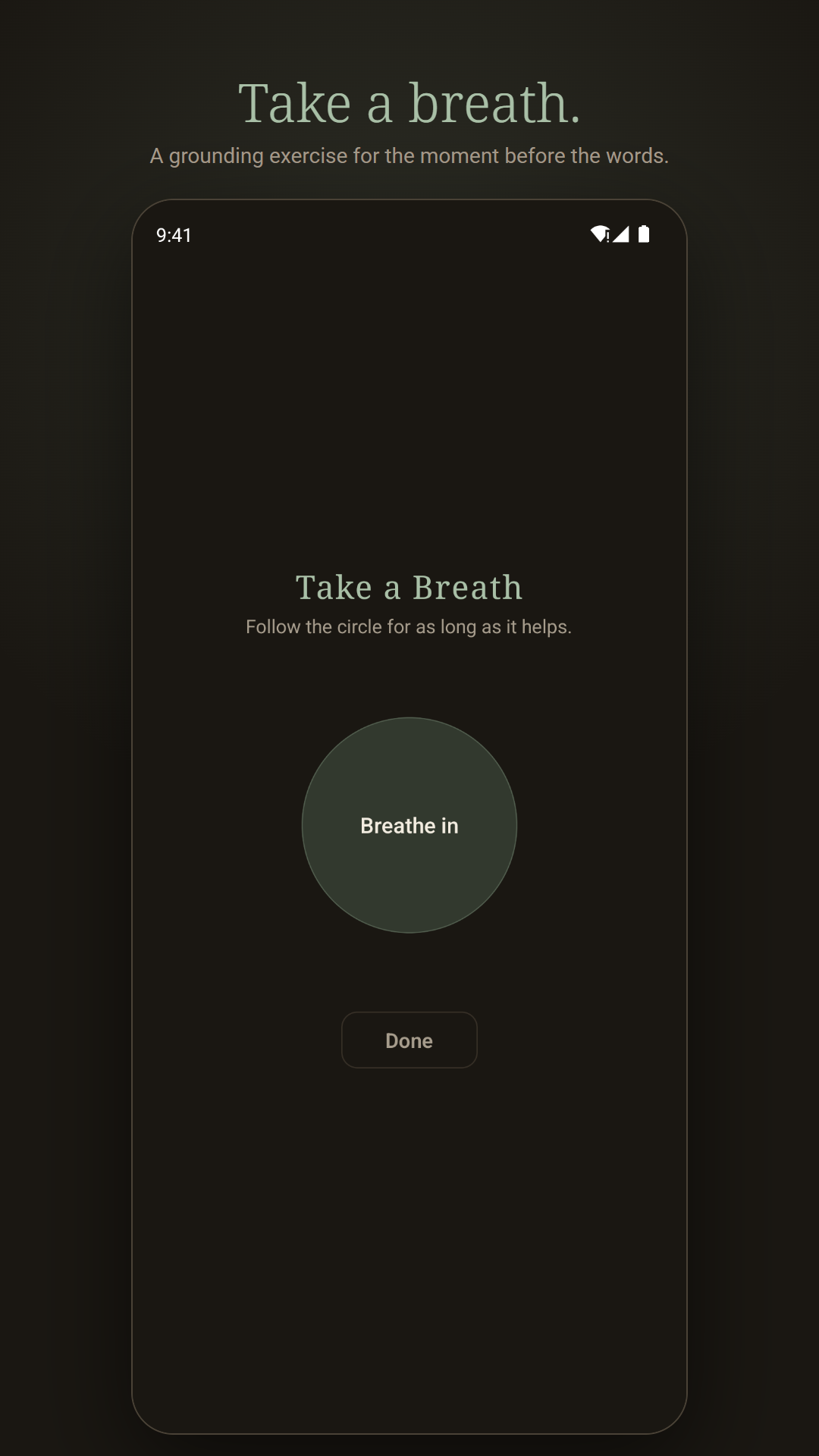
When something needs more room, guided sessions walk through a theme such as a difficult decision, a hard conversation, setting a boundary, or grief. Patterns shows mood trends and recurring themes over time. A private journal and a one-tap breathing exercise round it out; everything can be deleted from inside the app.
Companion is a reflection tool, not a substitute for professional care, and it says so. If a check-in shows signs of real distress, it puts the crisis line for the user's country first. It is free with one check-in a day; Premium is $4.99 a month after a seven-day trial.
From the makers: why listening, not leading
Most apps in this space want to help you feel better, and they get there by leading: a prompt that steers, a tip, a plan for the week. We built Companion the other way round. The first thing it does with anything you write is say it back to you, plainly, so you can hear whether it is true. Only then does it offer one observation. Never advice, never a lecture, never a follow-up question that already assumes the answer.
The second decision was memory. A reflection that could have been written for anyone is not worth much. Companion keeps your last thirty days of check-ins and sessions in view, so what it notices is yours: the decision you have circled three times this month, the theme that keeps returning on Sunday nights. It says so, once, and leaves the conclusion to you.
The third decision was about what Companion is not. It is not therapy, and it does not diagnose or treat anything. If a check-in looks like real distress, the crisis line for your country comes first, before any reply. Being honest about that boundary is part of being worth trusting with everything else.
Kronos Automation, makers of Companion
Assets
Phone screenshots are 1080 × 2400 PNG. Please use them unaltered, and do not crop the icon or place it on a busy background.

Naming and brand notes
- The app is Companion. The Google Play title is "Companion: Daily Reflection"; in running text, "Companion" is enough.
- Describe it as a reflection app, a daily check-in, or a thinking partner. Please do not describe it as therapy, a therapist, or a mental-health treatment; it is none of those, and the app says so to its users.
- The reply has two parts, "Heard" and "Noticing". That order, mirror first and observation second, is the heart of the product.
- Companion shows the crisis line for the user's country when a check-in shows signs of distress. If you cover that feature, that is the accurate description.